What you see first
Lo que ves primero
The drawing
El dibujo
The drawing can be beautiful. It is not one of the words. Turn the bottle and read the line the law actually required. A gold edge, a crest, a story about a grandfather: the shop may print all of that. None of it is Reserva, and none of it is the year.
El dibujo puede ser hermoso. No es una de las palabras. Voltea la botella y lee la línea que la ley de verdad exigió. Un borde dorado, un escudo, un cuento de un abuelo: la tienda puede imprimir todo eso. Nada de eso es Reserva, y nada de eso es el año.
A name is a percentage
Un nombre es un porcentaje
The grape
La uva
In the United States a single grape name is a percentage, and it has to sit with a place. At least 75 percent of the wine is that grape, and that whole share grew in the place named beside it. A few strong native grapes may go lower, and then the label has to say so. Two grapes on the label means those grapes are the whole wine, and each one shows its share. The name is not a poem.
En Estados Unidos el nombre de una sola uva es un porcentaje, y tiene que ir con un lugar. Al menos el 75 por ciento del vino es esa uva, y toda esa parte creció en el lugar que va a su lado. Unas pocas uvas nativas de sabor fuerte pueden bajar de ese piso, y entonces la etiqueta tiene que decirlo. Dos uvas en la etiqueta significan que esas uvas son todo el vino, y cada una muestra su parte. El nombre no es un poema.
Where it stands
Dónde está parado
The light
La luz
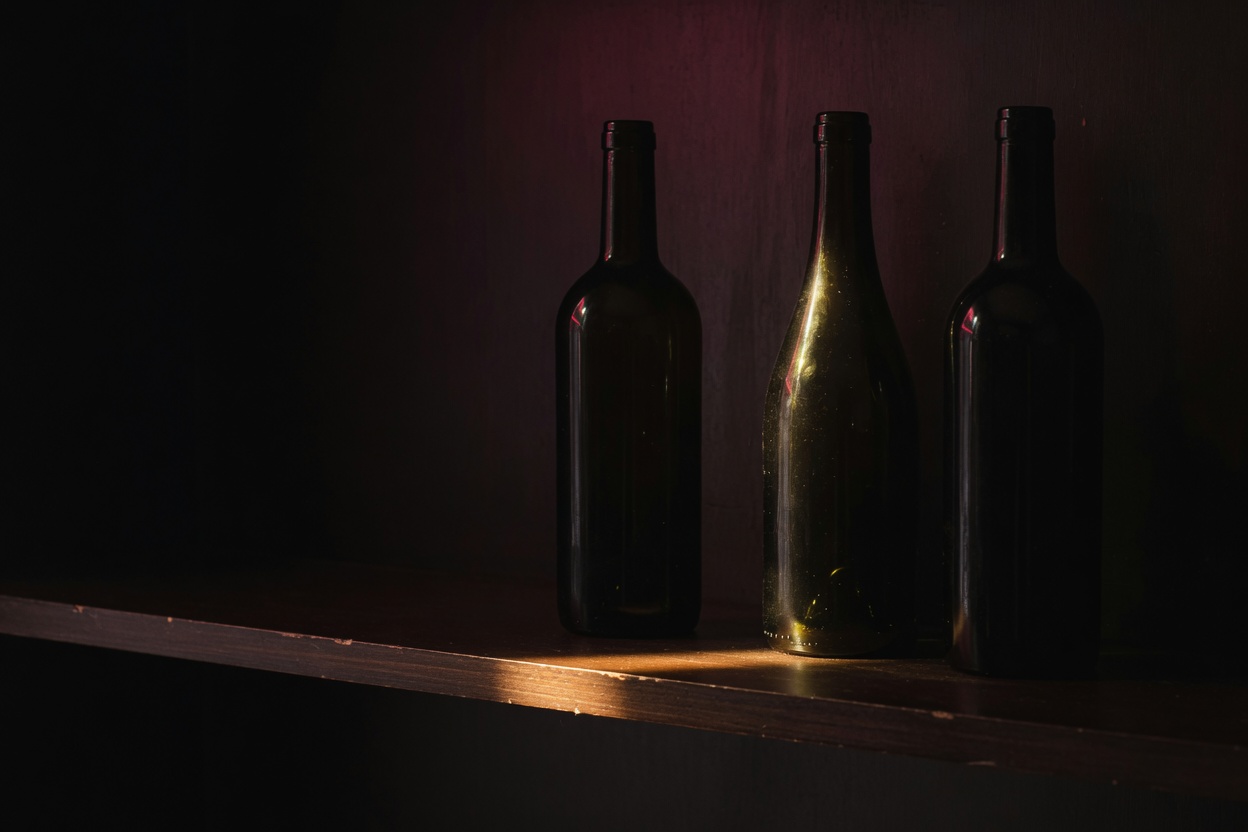
Where the bottle stands is part of the offer. Eye level is where a hand goes. A window is where a bottle is seen, and also where the light sits on it. A clear bottle in that light has been working for the shop. Ask how long. The dark bottle in the shade is not a better wine. It has only been standing in a kinder spot.
El lugar donde está la botella es parte de la oferta. A la altura de los ojos es donde va la mano. Una vitrina es donde una botella se ve, y también donde la luz se le queda encima. Una botella clara en esa luz ha estado trabajando para la tienda. Pregunta cuánto tiempo. La botella oscura en la sombra no es un vino mejor. Solo ha estado parada en un sitio más amable.
Before the tag
Antes de la etiqueta de precio
The neck
El cuello
Look at the neck before you look at the number. A young bottle should be full into the neck. A low fill on a wine that is not old is a question. A cork that has climbed, or a neck that is sticky, is the sign Heat already names. You can see it here, before the bottle is yours.
Mira el cuello antes de mirar el número. Una botella joven debe llegar llena hasta el cuello. Un nivel bajo en un vino que no es viejo es una pregunta. Un corcho que subió, o un cuello pegajoso, es la señal que El calor ya nombra. Aquí la puedes ver, antes de que la botella sea tuya.
Not a verdict
No es un veredicto
The tag
La oferta
A lower tag is not a verdict. It can be the end of a case, a slow month, or a bottle that waited too long. It can also be a wine the shop believes in and has not made you see. The number does not say which. This page keeps no list of prices. The shelf does not deserve one either.
Una oferta más baja no es un veredicto. Puede ser el final de una caja, un mes lento, o una botella que esperó demasiado. También puede ser un vino en el que la tienda cree y que no te ha hecho ver. El número no dice cuál. Esta página no guarda una lista de precios. El anaquel tampoco la merece.
Then ask
Luego pregunta
Two questions
Dos preguntas
Ask when it arrived, and whether it was kept cool. Heat is the room that tells you what the answer means. The shelf is only the place where you ask. If the shop cannot say, you have already learned something.
Pregunta cuándo llegó, y si lo guardaron fresco. El calor es el cuarto que te dice qué significa la respuesta. El anaquel es solo el lugar donde preguntas. Si la tienda no sabe decirlo, ya aprendiste algo.